Ceremonial Rituals
Ceremony rituals are symbolic actions that are performed during ceremonies to honour tradition, bring good luck or unite two people. These traditions are more than modern personal celebrations they are deep rooted in ancient Roman, Greek, Medieval and religious customs,
Bridesmaids, giving the bride away, tossing the bouquet, wearing some old, new borrowed and blue all connect to the past and are performed during most ceremonies, however, there are other rituals that are lesser known and used less frequently.
Handfasting (Tying the Knot)
An ancient Celtic tradition where your hands are bound with ribbons or cords to symbolise your union.
You face each other, joining hands (often right hand to right hand) while your celebrant or loved one wrap cords or ribbons around your wrists forming a knot. Different colours are used to represent aspects of your relationship, such as red for passion, black for strength, or green for fertility.
At the end of the ceremony, the celebrant explains that whilst the physical ties will be removed, the strength of the internal ties forged that day will remain.
Handfasting ribbons can be framed a charming keepsake of the day.

Sand Blending
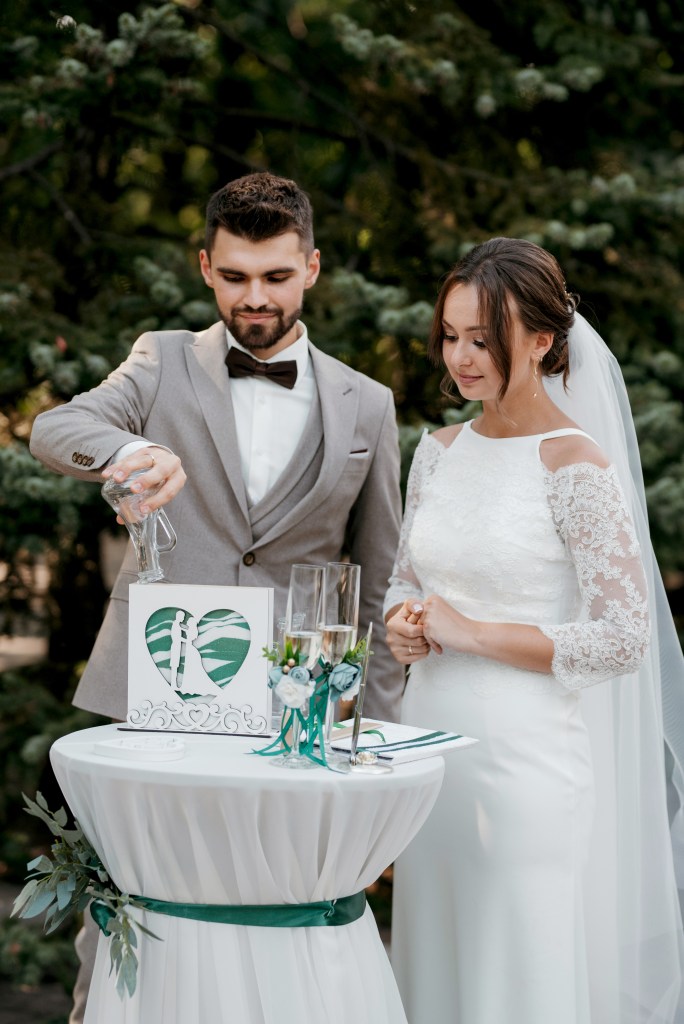
A sand ritual is a beautiful way to blend two individuals into one family.
In this ritual sand is poured into a vessel, the sand represents the individuality each person brings to the relationship. If the ceremony includes children it’s a nice way for them to be involved and they can have their own colour to symbolise inclusion in the family. The ceremonial vessel full of the colourful sand can be kept by you to remember your day.
Specific coloured sand have their own meaning, just like ribbons used in handfasting;
White: Purity, devotion, spiritual values and a connection with a higher power
Red: Love, passion, romance, physical energy and strength
Blue: Patience, tranquility, trust and long-term commitment
Yellow: Happiness, optimism, friendship and harmony
Green: Health, luck, prosperity and growth in love
Purple: Dignity, strength, wisdom and spirituality
Orange: Creativity, enthusiasm, trust and adventure
Pink: Tenderness, romance, happiness and affection
Black: Strength, resilience, sophistication and wisdom
Gold/Silver: Success, prosperity, inspiration and creativity
There is an alternative “The Salt-Pouring Ritual” where salt is used instead of sand, you can use the shared salt to cook at hope, making it a great option if you are a food-loving couple.
Unity Candle
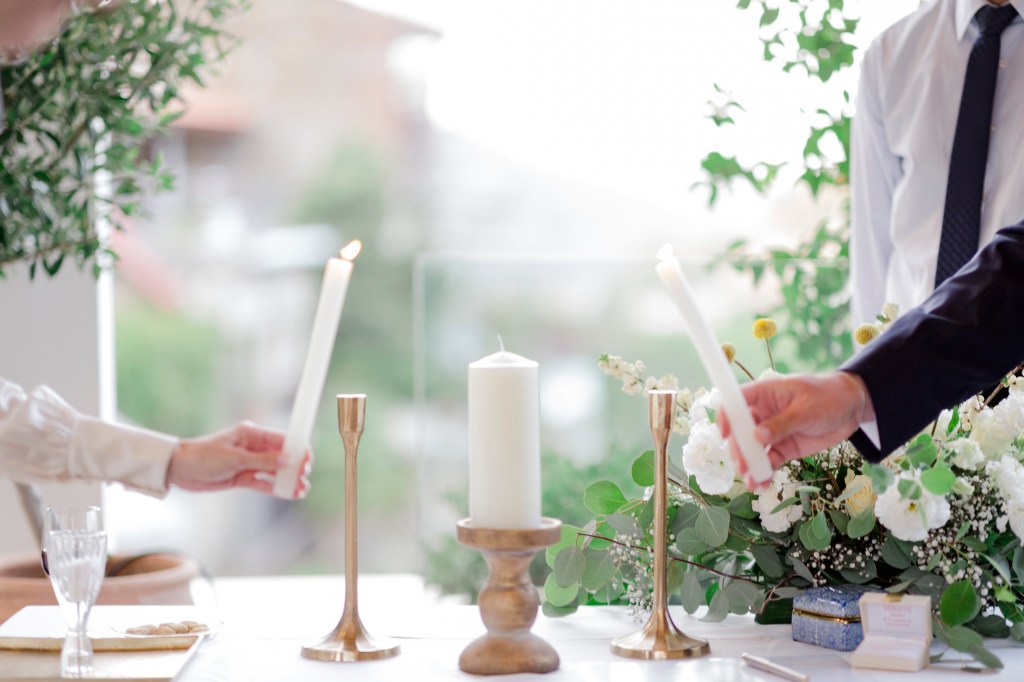
A unity candle is a ritual symbolising the union of you both (and often your families) into one, normally it is done after your vow reading. You each have a lit candle and you jointly light a single, larger central pillar candle, representing your shared future.
Drink the Cup (or Quaich)
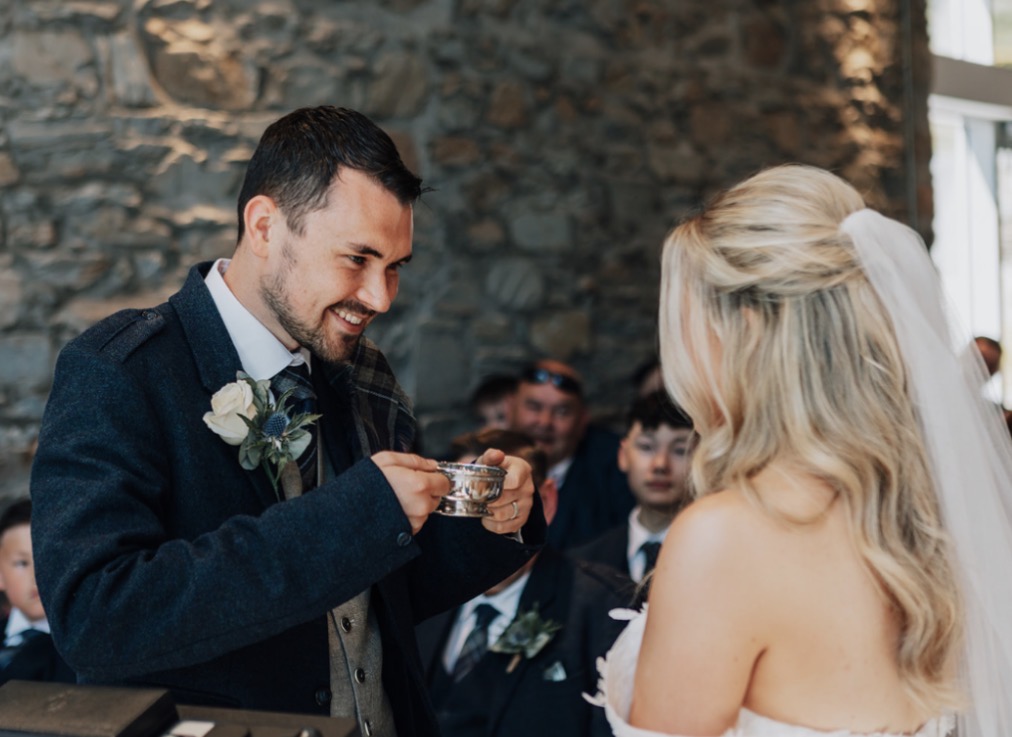
This is an ancient Scottish tradition, the vessel a “quaich” (pronounced Quake) is a two handled shallow bowl, sometimes called a “loving cup” or “cup of friendship”. Because it has two handles, you use both hands to drink from it. Historically, this meant neither person could hold a weapon signalling complete trust.
You typically share your first drink together as a married couple from the cup, this traditionally use to be whiskey but today you can use different drinks, some couples mix their favourite drinks together to further represent their union,
The ritual represents you both sharing both the bitter and sweet moments in life.
There is another Scottish tradition “oathing the stone”, where you place your hands on a stone while reciting your vows which makes your promises “set in stone”.
Jumping the Broom
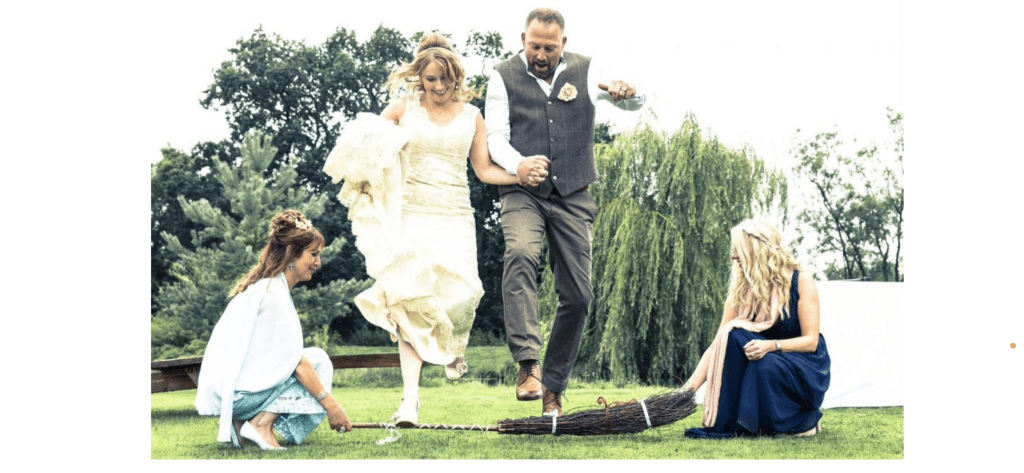
Jumping the broom is a popular wedding tradition where you leap over a ceremonial broomstick at the end of your ceremony to symbolise sweeping away the past and jumping into your new life together.
The broom’s parts, in modern interpretations, the wooden handle represents the strength of the family, the straw bristles signify the extended family, and the decorative ribbons represent the tie that bind you as a couple.
Towards the end of the ceremony, after the vows the broom is placed on the floor and you hold hands and jump over it. Your celebrant will talk about the fact that sharing a life requires many leaps of faith and the jump is a gesture of your dedication to working together through both tough and easy times. You are effectively jumping into your new life together.
Warming the Rings
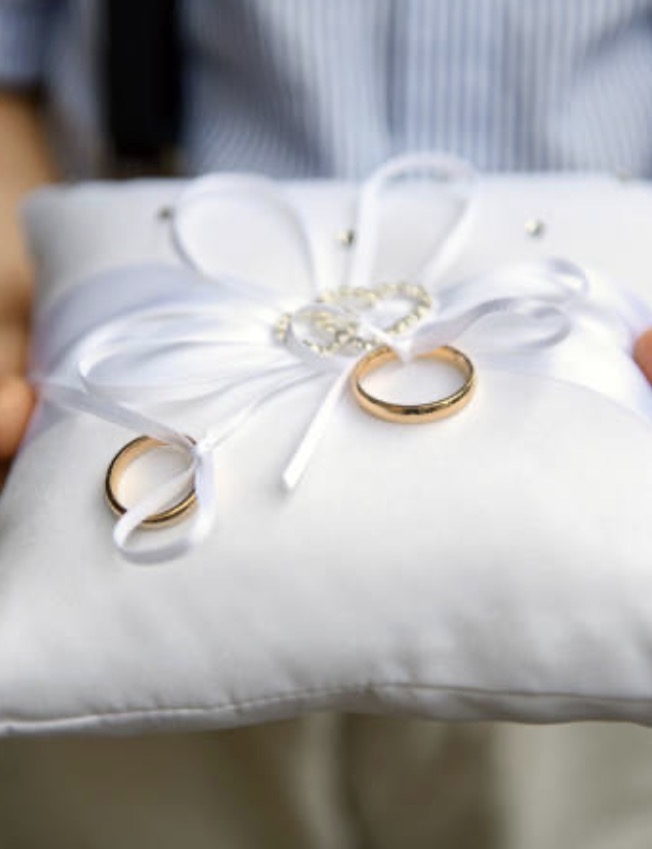
This ritual has Irish roots, where guests pass round your wedding bands, holding them briefly to bless them with love, and good wishes before they are exchanged. The inclusive gesture ensures the rings are filled with positive energy from loved ones.
The rings are typically placed in a small box, pouch or died with a ribbon on a cushion which is passed around the guests. You can appoint a ring chaperone who looks after the rings and make sure they are returned in time for your vows, a great way to involve a close friend or family member in the ceremony.
The same ritual can be done with handfasting cords and ribbons.
Planting a Tree
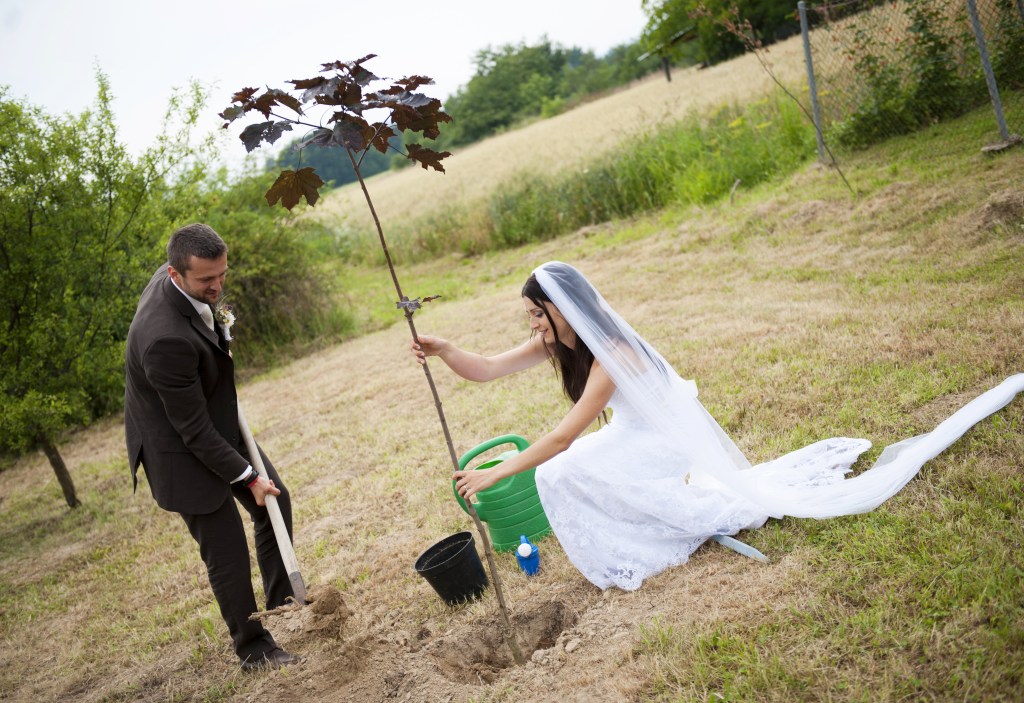
The tree-planting ritual is a wedding tradition that dates back to ancient times, and has its roots in many cultures. As a unity ritual, the tree you plant is meant to symbolise how your life will take root from the day you are married and your love will continue to grow and flourish throughout the years. Trees are strong but flexible, and well able to weather any storm, but they also need to be tended to and nourished to stay this way, so this ritual is a great reminder of that. You can of course use any kind of plant for the ceremony.
Still got a question about a ritual or your ritual isn’t listed, please “ask me” and I will get back to you with an answer.
 Forever starts here